


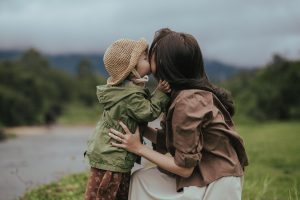
“Why is the moon following us, athey?” asked my niece as we walked home from the vegetable shop. Years later, my three-year-old son stood by the window, silently watching the rain. After a few minutes, using the few words he knew, he said, “tap, tap, open, open.” These moments, filled with wonder and curiosity, are etched in memory.
They happened nearly two decades ago, when childhood was slower, playful, and filled with room for questions. Today, little Aanya walks to preschool with a bag full of books and homework that took her three hours to complete. Once again, she missed her visit to the play area. Her parents, proud of her handwriting, posted pictures of her neatly written pages on WhatsApp along with a certificate for best handwriting. In many schools now, early learning is measured by worksheets, colouring inside the lines, and homework pages. There is less space for questions, imagination, or movement.
“Write five lines about a cow,” her teacher instructed. Aanya, who has never seen a cow in her city neighbourhood, wanted to draw the dog she sees each morning on her way to school. But that idea didn’t fit into the worksheet. She had to complete the assignment before she could go out to play. If she didn’t, even playtime at school would be taken away.
Writing is often seen as the only proof of learning in classrooms like Aanya’s. More pages mean more learning. Many parents take pride in this, equating quantity with quality. Schools, competing for admissions, respond by offering what they believe parents want. Homework becomes a performance, much like how some doctors who quickly prescribe antibiotics to satisfy patients are often seen as more effective, even when caution would serve better. We must ask ourselves whether we are choosing short-term gratification or long-term growth.
Parents often want visible proof of learning — something to show on their fridge or during a video call with family. Schools, aware of this need, try to please by sending home piles of worksheets. But is this what early childhood education should be? Do we truly understand how children learn at this stage? Do schools help parents understand developmental needs? And if educators know what children really need, do they have the confidence to follow through and educate parents, too?
Children like Aanya quickly learn that school is not a place for joy, discovery, or play. It becomes a place of performance. Years later, their strongest memories may not be of worksheets or handwriting awards. They will likely remember the stray dog they passed each day, the rare time they got to play, the story about a fairy turning a pumpkin into a chariot, or the magician at the school picnic.
Social-emotional learning is often mentioned in education conferences. However, in classrooms, it is reduced to superficial exercises. Children are taught to identify emotions with faces — “show me your happy face today” — without exploring what to do with those feelings. Parents, meanwhile, turn to online articles to make sense of tantrums and meltdowns.
Children are taught to identify types of trees, shrubs, and herbs before they fully grasp how a seed turns into a plant. I recently attended a workshop on dance therapy in education, where the facilitator showed how movement could be used to teach concepts such as metamorphosis and addition. It was a vivid reminder that learning can be joyful, rich, and multi-sensory. Yet, in many schools, the focus remains on rote memorisation, such as knowing multiplication tables before understanding grouping.
Real learning is often hard to measure. It can show in the way a child asks a question, comforts a friend, solves a playground problem, or figures out how to balance on a beam after several tries. These moments often go unnoticed because they cannot be captured on a worksheet.
Why are we doing this? Homework is often given to meet parental expectations, not because it benefits the child. Yet most parents do not fully understand how children learn or what is appropriate for their age.
Children should be learning language through stories, rhymes, songs, and play. Instead, they are tested on spellings that break phonics rules and are expected to write long passages that strain their developing muscles.
This mismatch affects teachers, too. They are under pressure to complete the syllabus, meet parents’ demands, and deliver results. Professional development does not always prepare them to make learning visible in ways that go beyond written work. They are encouraged to adopt play-based approaches, but are handed textbooks and workbooks that offer little room for play.
What can we do for teachers? Give them time and space. Allow them to listen, laugh, and learn alongside their students. Ultimately, children may not remember how neatly they wrote “butterfly.” They will remember how their teacher made them feel, how stories were told with dramatic voices, or how they finally understood a math concept through play.
These moments do not make it into notebooks. But they stay in memory. Schools can train teachers to document learning through photos, observations, and audio recordings that capture the thinking process, not just the final answer. Instead of checking every line of homework, parents can ask children about what they learned, involve them in everyday tasks, and let them explore freely. Most importantly, they can look at their children’s creations with wonder, not judgement.
Schools must be brave enough to slow down. They must prioritise readiness over rigour and allow space for messiness, play, and imagination. Learning in early years is not tidy or linear. It is magical and often invisible. It happens when children solve a problem with a friend, pretend to be chefs, or draw zebras with five legs.
Let them build towers that fall. Let them draw pink moons and blue elephants. There will be time enough later for rules and facts.
So the next time Aanya comes home and says, “We just played today,” may her parents smile. They will know she learned more than they could see.
(The author is an early childhood educator and curriculum consultant interested in play-based and inclusive learning practices. She works closely with schools, teachers, and parents to create developmentally appropriate learning environments that nurture curiosity and emotional well-being.)